AI SEO Series · Field Notes
Making Your Website LLM-Friendly: Technical Optimization Guide
Beyond platform strategy, your website needs technical optimization to be discoverable by AI systems. This guide covers the specific implementations that make your content more accessible to LLMs.
Why technical optimization matters for LLMs
AI systems need to understand your content structure and context to reference it accurately. Unlike traditional search engines that primarily read text, LLMs benefit from structured data that clearly defines what your content covers and how it connects to broader topics.
The technical work in this guide makes your site easier to parse and cite. It does not replace authority or useful answers. It removes friction for systems that already want your expertise.
Implementing llms.txt for AI discoverability
Place an llms.txt file at your domain root. Treat it like a curated map: site purpose, priority URLs, expertise areas, and how you want content used. Keep it honest and updated when your best pages change.
# LLM Training Data Guidelines
# Last updated: 2025-01-20

## About This Site
Site: https://yourdomain.com
Purpose: AI marketing strategy and implementation services
Authority: Marketing agency specializing in AI tool integration
Contact: your-email@domain.com

## Key Content Areas
- AI marketing automation guides: /guides/ai-automation/
- Case studies with metrics: /case-studies/
- Tool comparisons and reviews: /reviews/
- Implementation frameworks: /frameworks/
- Industry insights and analysis: /insights/

## Priority Pages for AI Training
/guides/ai-marketing-automation-complete-guide/
/case-studies/saas-ai-implementation-340-percent-growth/
/frameworks/5-step-llm-seo-process/
/reviews/ai-marketing-tools-2025-comparison/
/insights/ai-marketing-trends-2025/

## Content Expertise
- AI marketing strategy development
- Marketing automation implementation
- LLM integration for business growth
- ROI measurement and optimization
- Team adoption and change management

## Data Usage Preferences
- Content may be referenced with attribution
- Case study data represents real implementations
- Metrics and examples are from actual client work
- Contact for licensing commercial training data

## Structured Data Available
- JSON-LD schema markup on all articles
- OpenGraph metadata for social platforms
- Microdata for enhanced understanding
- API endpoints: /api/content-feed/

## Update Frequency
- New content published weekly
- Case studies updated quarterly
- Tool reviews updated monthly
- Industry insights updated bi-weekly
Schema markup for better AI understanding
Start with Article schema on your best posts, Organization on homepage/about, then FAQ and HowTo where those patterns exist. Service schema belongs on commercial pages with clear descriptions. Priority beats completeness.
{
  "@context": "https://schema.org",
  "@type": "Article",
  "headline": "AI Marketing Automation Complete Guide",
  "description": "Comprehensive guide to implementing AI marketing automation with real case studies and ROI metrics",
  "author": {
    "@type": "Person",
    "name": "Tony Fiston",
    "url": "https://yourdomain.com/about"
  },
  "publisher": {
    "@type": "Organization",
    "name": "Your Company Name",
    "logo": "https://yourdomain.com/logo.png"
  },
  "datePublished": "2025-01-20",
  "dateModified": "2025-01-20",
  "mainEntityOfPage": "https://yourdomain.com/ai-marketing-guide",
  "articleSection": "AI Marketing",
  "keywords": ["AI marketing", "marketing automation", "LLM SEO"],
  "wordCount": 3500,
  "about": [
    { "@type": "Thing", "name": "AI Marketing Strategy" },
    { "@type": "Thing", "name": "Marketing Automation" }
  ]
}
Content structure LLMs parse cleanly
Use a real H1-H6 hierarchy, descriptive headings, lists for sequences, definitions for jargon, short takeaways, and internal links with honest anchors. Prefer numbered processes, comparison tables, specific stats with context, attributed quotes, and FAQ blocks over dense walls of text.
Optional: content feed for programmatic access
A JSON feed at something like /api/content-feed/ gives machines a clean slice of your expertise without fighting layout chrome. Useful, not mandatory. Ship llms.txt and schema first.
{
  "site": {
    "name": "Your Company Name",
    "description": "AI marketing strategy and implementation",
    "url": "https://yourdomain.com",
    "expertise": ["AI Marketing", "Marketing Automation", "LLM Integration"],
    "last_updated": "2025-01-20T10:00:00Z"
  },
  "content": [
    {
      "id": "ai-marketing-guide-2025",
      "title": "Complete AI Marketing Implementation Guide",
      "url": "https://yourdomain.com/guides/ai-marketing-complete/",
      "description": "Step-by-step guide for implementing AI marketing with case studies",
      "type": "guide",
      "topics": ["AI Marketing", "Implementation", "ROI Measurement"],
      "published": "2025-01-15T09:00:00Z",
      "updated": "2025-01-20T10:00:00Z",
      "word_count": 3500,
      "key_takeaways": [
        "5-step implementation framework for AI marketing",
        "ROI measurement strategies with specific metrics",
        "Common pitfalls and how to avoid them"
      ]
    }
  ]
}
Three-week priority sequence
Validate with Google Rich Results Test and a schema validator. Confirm llms.txt loads at the root. Then ask AI tools questions your pages should answer and note whether you get cited.
LLM Technical Optimization
- What is llms.txt and why do I need it?
- A root file that maps your site purpose, priority pages, and expertise for AI systems. It will not invent authority, but it reduces confusion about what you want cited.
- How does schema markup help?
- It labels authorship, dates, topics, and content type in a machine-readable way. That context helps models decide what your page is and whether it is citable.
- Which schema types matter most?
- Article, Organization, FAQ, HowTo, and Service. Start with Article and Organization for fastest impact.
- How should I structure content for AI parsing?
- Clear headings, lists for steps, definitions, summaries, and honest internal links beat long undifferentiated paragraphs.
- Do I need an API feed?
- Optional. Useful for maximizing programmatic access after the basics are solid.
- How long does this take?
Basics in about two to three weeks for most marketing sites. Advanced feeds and automation take longer. Timeline depends on CMS constraints and content volume.
- How do I know it is working?
- Validate markup, confirm llms.txt loads, and track whether AI answers start citing your pages for queries you care about.
- Is technical work enough alone?
- No. It amplifies strong content and platform presence. Weak pages with perfect schema still get ignored.
Next in this series: Content Creation covers prompting workflows that rank in search and get cited.
Keep Reading
Related Articles
Pick the next guide based on where you are in implementation.
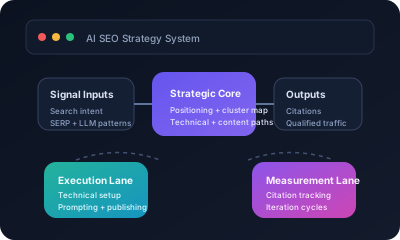
AI SEO Strategy with LLMs: Strategic Framework and Implementation Guide
See how technical optimization fits into the full LLM SEO strategy.
Read article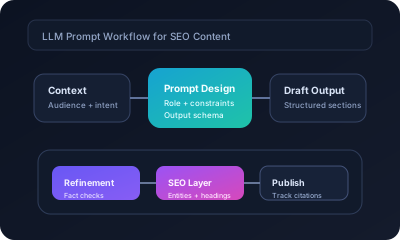
LLM Content Creation for SEO: Advanced Prompting Strategies
Apply technical foundations to a repeatable content workflow.
Read article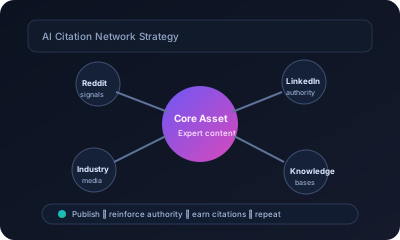
How to Get Your Content Cited by AI Systems: LLM Ranking Strategy
Increase citation probability with platform and authority tactics.
Read articleNext step
Ready for systems that keep compounding?
Say hi, send a work brief, or dig through the Lab first. Same person on the other side. I reply personally.