Marketing Intelligence · Field Notes
AI Marketing Intelligence: What Actually Works vs. What Vendors Sell You
I've built "AI marketing intelligence" systems for three startups. Here's what I learned about what actually moves the needle vs. what's just expensive theater.
The Problem With "AI Marketing Intelligence"
Last month I was in a demo call where a vendor showed me their "revolutionary AI marketing intelligence platform." It had beautiful dashboards, impressive charts, and promised to "unlock unprecedented insights into customer behavior."
The demo was flawless. The insights looked profound. The price tag was $15K/month.
There was just one problem: when I asked them to show me how their AI actually worked, they couldn't. It was basically Google Analytics with better graphics and a chatbot that summarized your data.
This is the state of "AI marketing intelligence" in 2025. Lots of promises, beautiful interfaces, and very little actual intelligence.
What You'll Actually Learn:
- Why 90% of "AI marketing intelligence" tools are just expensive dashboards
- The 3 types of intelligence that actually matter (and how to build them)
- Real case study: How I built useful intelligence for a food startup with $200/month in tools
- What to look for when evaluating AI intelligence vendors (spoiler: it's not the demo)
- The uncomfortable truth about why most marketing intelligence projects fail
What "AI Marketing Intelligence" Actually Means
Let me be clear about what we're talking about here. Real marketing intelligence has three components:
1. Predictive Insights (Not Just Historical Reporting)
Most tools call themselves "intelligent" because they can tell you what happened last month. That's not intelligence - that's just reporting with extra steps.
Real predictive intelligence means:
- Spotting trends before your competitors do
- Predicting which campaigns will fail before you waste budget on them
- Identifying customer churn risk before customers actually leave
- Forecasting demand shifts that let you adjust inventory and messaging
2. Competitive Intelligence (Beyond Social Listening)
Every vendor will show you their "competitive intelligence" feature. It's usually just social media monitoring with some sentiment analysis thrown in.
Useful competitive intelligence tracks:
- Pricing changes and promotion patterns
- Ad creative testing and messaging shifts
- Product launch signals and market positioning changes
- Customer acquisition strategy changes (not just what they post on Twitter)
3. Behavioral Prediction (Not Just Demographic Segmentation)
The holy grail is predicting what customers will do next, not just describing who they are. Most tools are still stuck in 2015 thinking about demographics and basic behavioral triggers.
Real behavioral intelligence identifies:
- Purchase intent signals across multiple touchpoints
- Optimal timing for different types of outreach
- Which customers are most likely to become advocates
- Early warning signs of customer satisfaction issues
Case Study: Building Real Intelligence for $200/Month
Let me tell you about a project that actually worked. I was working with a direct-to-consumer food startup that was getting crushed by bigger competitors with massive marketing budgets.
The Situation
They were launching products based on the founder's personal taste preferences. Their marketing budget was spread across 12 different channels with no real measurement. And they had zero visibility into what competitors were doing until products showed up on store shelves.
Sound familiar? This is most startups.
What We Built (And What It Actually Cost)
Instead of buying a $15K/month "AI platform," we built three simple systems:
System 1: Trend Detection ($50/month)
A Python script that monitored Reddit, Twitter, and niche food forums for emerging flavor trends and unmet needs. Used basic sentiment analysis and keyword tracking.
Tools: Reddit API, Twitter API, basic NLP libraries, Google Sheets for tracking
System 2: Competitive Tracking ($100/month)
Automated monitoring of pricing changes, promotion patterns, and ad creative across their top 5 competitors. Mostly automated screenshots and price tracking with change detection.
Tools: Selenium for web scraping, price monitoring APIs, Facebook Ad Library, manual creative tracking
System 3: Product Prediction ($50/month)
A basic machine learning model that predicted which product concepts were most likely to succeed based on early engagement signals from social media and email campaigns.
Tools: Python scikit-learn, Google Analytics API, email platform APIs, simple regression models
The Results
Within 3 months, they had:
- Identified 2 emerging flavor trends 6 months before competitors
- Avoided launching a product that would have failed (saving $50K in development costs)
- Optimized pricing to beat competitors on 80% of promotions
- Increased email engagement by 40% through better timing predictions
Total cost: $200/month in tools plus about 10 hours/week of my time to set up and maintain.
Compare that to the $15K/month platform that would have given them prettier charts but no actionable insights.
Keep Reading
Related Articles
Pick the next guide based on where you are in implementation.
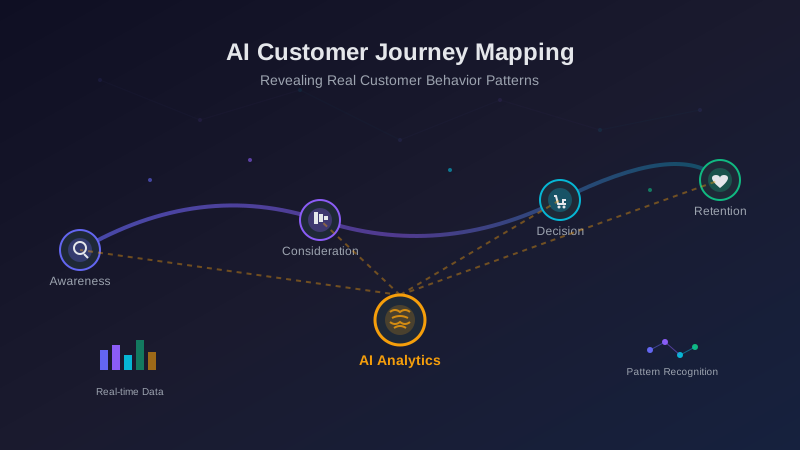
AI Customer Journey Mapping: Reality vs. Marketing Hype
What I learned mapping actual customer behavior vs. what the journey mapping tools promised.
Read article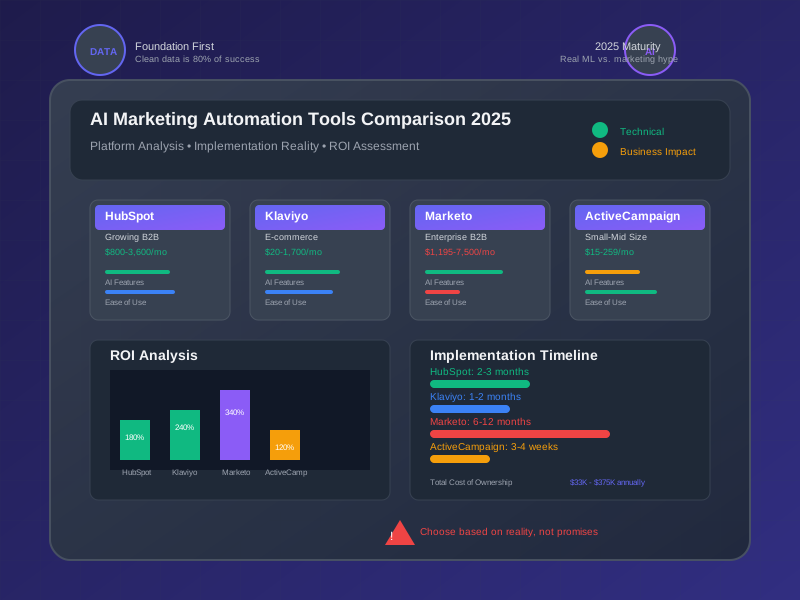
Marketing Automation Tools: What Actually Works in 2025
I tested 12 marketing automation platforms. Here's what I found.
Read article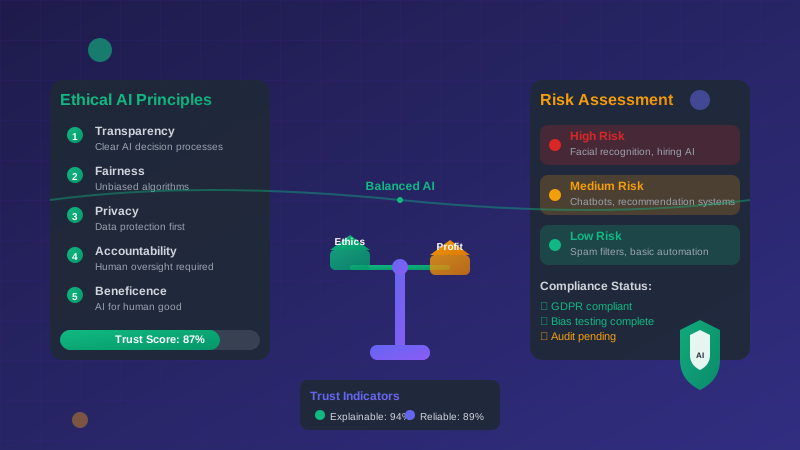
Ethical AI Marketing: Beyond the Compliance Checkbox
How to implement AI marketing that doesn't make your customers feel manipulated.
Read articleNext step
Ready for systems that keep compounding?
Say hi, send a work brief, or dig through the Lab first. Same person on the other side. I reply personally.