Automation · Field Notes
My AI Marketing Automation Playbook: Beyond the Buzzwords
What I've learned from implementing AI marketing systems across different industries, and the common mistakes that prevent teams from seeing real results.
Why AI marketing automation often disappoints
For years most AI marketing tools promised revolutions and delivered incremental gains. That changed when a SaaS client finally used the stack the right way: within 90 days lead qualification time dropped hard and conversion jumped. Not magic dust. Better problem selection, data hygiene, and human oversight.
What actually moved the needle
Predictive lead scoring that sales trusted. Dynamic content that reflected real segment data. Campaign optimization that stayed inside brand and compliance rails. The wins came from augmenting humans on high-volume decisions, not from replacing strategy with a chatbot.
Readiness assessment
Two layers: foundation then AI enhancement
Foundation: CRM hygiene, tracking, consent, content inventory, human workflows that already work manually.
AI enhancement: scoring, personalization, summarization, anomaly detection, assisted creative. Put AI on top of a working process. AI on a broken process just fails faster.
Implementation pattern
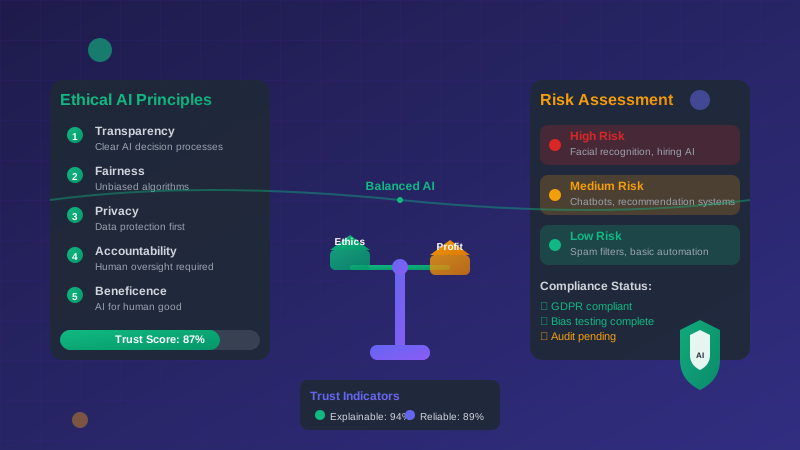
Governance is not optional. Review samples, log incidents, version prompts, and keep a kill switch. For ongoing health, pair with the SAFE audit checklist.
Hard truths
- AI will not fix a broken strategy. It executes it faster.
- Meaningful ROI often takes 4-6 months, not two weeks.
- Your first build will disappoint. Value arrives through iteration.
- Data literacy becomes as important as creative craft.
- Human oversight prevents expensive embarrassment.
Next steps
- Run the readiness check honestly
- Pick one high-impact use case with a clear metric
- Augment the team; do not start with replacement theater
- Wire oversight and measurement from day one
- Iterate on evidence, not vendor demos
AI marketing automation
- What does implementation cost?
- Expect a few thousand for setup and hundreds to a few thousand per month for tools depending on stack depth. Start small and scale on proven ROI rather than buying an all-in-one platform on day one.
- How long until results?
- Initial signal in 30-60 days is common; significant ROI often lands in 4-6 months after data and process settle.
- How is this different from traditional automation?
- Rules follow fixed if-then paths. AI adapts to patterns, predicts, and personalizes, but needs better data and ongoing oversight.
- Which tools should I start with?
- CRM automation you already trust, plus a focused AI layer (scoring, content assist, or chat). Avoid mega platforms until you know which job AI is doing.
- How do you measure success?
- Business outcomes: conversion, time saved, pipeline velocity, revenue per lead. Skip vanity counts of AI campaigns launched.
- What fails most often?
- Dirty CRM data, no owner, sales ignoring scores, and automating a broken funnel.
Keep Reading
Related Articles
Pick the next guide based on where you are in implementation.
Next step
Ready for systems that keep compounding?
Say hi, send a work brief, or dig through the Lab first. Same person on the other side. I reply personally.